Osteoporosis
Osteoporosis is a disease in which the bones become weak and may break easily. In serious cases, something as simple as twisting to turn around can cause a weak bone to break. About 10 million Americans already have osteoporosis; another 34 million are at risk, meaning they are likely to get the disease. Estimates are that half of all women and up to one in four men over the age of 50 will break a bone because of osteoporosis.
What Causes Osteoporosis?
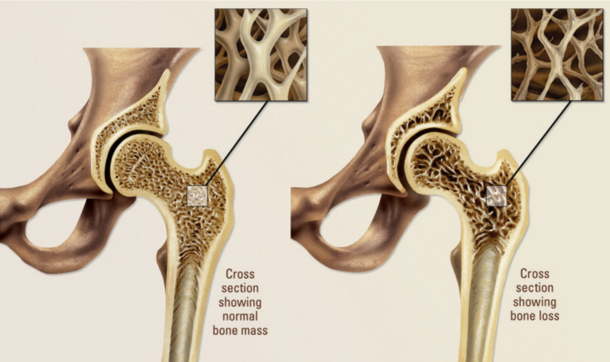
Osteoporosis is caused by the thinning of bone and the loss of bone density over time. It can occur when the body fails to form enough new bone, when too much old bone is reabsorbed by the body, or a combination of both. When this happens, the bones become more fragile, making them susceptible to fracture.
To understand how this can happen, go back to the ever changing bones. From birth to puberty your bones are adding new bone length, width and weight. Bones become stronger and reach their peak of bone mass during these years. The greatest bone mass is usually reached between 18 and 25 years of age. This is a critical period for overall bone health. In your mid 20’s, bone material loss can begin to exceed bone growth. Most people who get a diet rich in calcium and vitamin D, and have a healthy, active lifestyle that does not include smoking or excessive alcohol consumption during this period do not have an overall loss of bone. However, during this time, young adults who do not eat well or exercise are not storing the bone mass needed for later in life. By the third decade bone resorption can overtake bone building, and this loss of balance may lead to the development of osteoporosis.
Both women and men can develop osteoporosis. However, women have a higher incidence because women usually start with smaller, thinner bones than men and women lose bone mass rapidly as they lose estrogen production in the first 4-8 years after menopause. The loss of estrogen is generally a key factor in developing osteoporosis. Men can also develop osteoporosis which usually occurs around the sixth decade when there is a decrease in male testosterone production. Around age 65, men and women start losing bone mass at about the same rate.
Some risk factors for developing osteoporosis include:
- Older age (65 and older)
- Menopause prior to age 45
- Female
- Race and Ethnicity: increased risk for Caucasian, Asian, or Latino
- Family history of osteoporosis
- Smoking
- Heavy alcohol consumption
- Eating disorders
- Low body weight; small thin frame
- Too little calcium and vitamin D in the diet
- Medications such as steroids and anticonvulsants
- Inactive lifestyle
There are no symptoms in the early stages of osteoporosis. Later signs may include back and neck pain and general bone pain and tenderness. Loss of height and a stooped posture may also be a sign of osteoporosis. However, often times the first sign of osteoporosis is a fracture – most frequently a fracture of the vertebrae, shoulder, wrist, or hip.
There are several tests that can be performed to evaluate and detect the progress of osteoporosis. A bone mineral density test (BMD) is the best way to diagnose your bone health. The most widely used test is a DEXA scan (Dual-energy x-ray absorbtiometry). A spine or hip x-ray may show fractures or vertebral collapse. A measurement of the calcium level in the urine can also be obtained. Standard x-rays can diagnose a fracture
How to Treat Osteoporosis
The good news about osteoporosis is that it is a preventable disease. Treatment includes proper nutrition, medications, and exercise.
1. Diet and nutrition:
A diet that includes an adequate amount of calcium, vitamin D, and protein should be maintained. Foods rich in calcium include low-fat milk, yogurt, ice cream, cheese, salmon, and leafy green vegetables. If you are placed on medications to prevent or treat osteoporosis, it is essential that you eat the recommended amounts of these foods.
2. Medications
There are a variety of medications that may help to slow bone loss and maintain your bone mass. You should speak with your physician about whether you are a candidate for one or more of these medications.
3. Exercise
Exercise can reduce the chances of a fracture occurring. Bones are like muscles; they get bigger and stronger with the stress of exercise. Two types of exercises that will help build and maintain bone density are weight bearing activities and muscle strengthening.
Weight bearing activities
These can be high or low impact. High impact exercises, especially if started young, are the best for preventing osteoporosis. However, if you have broken a bone, or are at risk of breaking a bone, you may need to avoid high impact exercises. Your bone health status will dictate what type of exercise you can perform. Check with your physician or physical therapist before starting high impact exercises.
High impact exercises include:
- High impact aerobics
- Jogging/running
- Jumping rope
- Strenuous hiking
- Stair climbing
- Tennis and other racquet sports
- Certain types of dancing
Low impact weight bearing exercises are safer for people who cannot perform the high impact exercises. While these are not as effective in building bone mass, they can be helpful in stressing the bone and making them stronger.
- Low impact exercises include:
- Elliptical training machines
- Low impact aerobics
- Stair-step machine
- Bicycling
- Rowing machines
- Water aerobics
Muscle strengthening exercises
Strength training to build and maintain muscle mass has been found to stimulate bone growth and help prevent and treat osteoporosis. Ideally, these should start early in life. However, you can begin exercising at any age with proper instructions. Avoid certain types of strengthening exercises such as activities that round the spine such as standing and touching your toes, exercise machines that have you bending your trunk, sit ups and any activity that rounds or twists the spine.
Other exercises that improve balance, coordination and posture are also very important. Good balance will reduce falls that result in fracture. Consider activities such as Tai Chi, Qui Gong and other general conditioning exercises.
Good muscle strength promotes good posture. Good posture keeps your body in alignment, and allows you to move safely and efficiently. Some tips for good posture:
- Stand erect, with your ears over your shoulder and your stomach tucked in.
- Do not slouch when sitting.
- Learn to lift with your legs and not by bending over.
- Maintain an active lifestyle and regular fitness program. This will help to maintain overall health, prevent falls, and prolong personal independence.